Saturday, January 15, 2011

Who's Your City?
50% of Americans move every eight years. But are they making the right decision? Are they going to a city where they can be more themselves or less so? Richard Florida, who argues that the future of cities is bright because that's where bright people want to be, has developed a nice tool for estimating whether you're better off staying put or moving to a city that suits you better.
Caution: This is entirely based on your perceptions, with no data whatsoever offered by Florida's tool.
Note: You don't have to be American to use this tool, it's exactly as place blind as you are.
You can try the tool right here:
Friday, July 23, 2010
Worldchanging: Bright Green: London's Cycle Superhighways: Hopes for the Future of the New Blue Network
Great little post on Worldchanging on London's new cycle superhighways. It's a major step forward, and I'm glad to see London continuing to move in the right direction.
Thursday, June 24, 2010

The Safari Reader
Lovely.
Great feature. But it made me worry that perhaps people will want to do this on my blog. People like me. So, ahem, new layout.
Friday, April 17, 2009
All Stimulus Spending is Local
Local government spending decisions made now will affect quality of life, sustainability, and prosperity far into the future. In Virginia, particularly near Charlottesville where I live, the prevailing belief is that the private sector is laying people off and cutting back services and therefore the appropriate government response is to do the same: to tighten belts and institute fiscal discipline. This is disastrous. During a time of peak demand for services, jobs, and economic stability, and peak supply of labor, materials, financing, and federal and state support, local governments should be stepping up services to soften the inevitable problems that increasing unemployment bring, while laying down the infrastructure to increase the area’s competitiveness, and therefore land value, and therefore tax base.
But high taxes harm productivity!
Yes, taxes on productive activity like buildings, labor, and sales absolutely do harm productivity (called deadweight loss). But during times of economic distress, there is much greater investor demand for high quality bonds. At the same time, local spending can leverage even greater state and federal investment in infrastructure and services. Increased local spending during a recession creates and retains jobs, protects and improves quality of life, and gives a lifeline to investors.
But government investment is wasteful!
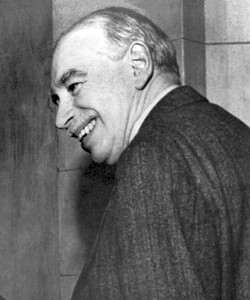
Keynes argued that this was fine, that spending on clearly unnecessary or downright destructive projects would be a net plus for the economy by providing jobs and investment income when they are most needed, kick-starting recovery. However, government waste is by no means necessary. Using planning techniques already well understood in many places, local leaders can prioritize projects that are more likely to provide a return on investment that can more than cover the debt obligations used to create them.
But high taxes hurt property values!
This is true, but quality services and infrastructure raise property values, and the net effect of taxes + services and infrastructure appears to be a big positive in most places. And clever financial options like Tax Increment Financing and more traditional bonds can smooth out the tax burden to be minimally uncomfortable.
But high taxes are unfair!
Most local taxes fall mostly on property, both land and buildings. Land taxes fall more heavily on those who own a great deal of land. This group tends to be more affluent, but some owners are certainly better able to deal with a larger tax burden than others. Land taxes make up only a small percentage of the property tax in the vast majority of American cities, so this effect is very small. Building taxes, which usually make up about 75% of the overall property tax burden, fall most heavily on low income households because they are passed on to renters and are built into the cost of all economic activity in an area, raising the local price of everything and slowing productivity. This is certainly a huge problem, but it can be avoided and spread out using debt financing. Starving local government is a lose-lose proposition, since it marries lower property values with fewer investment and job opportunities. More lasting and effective management of the damaging effects of the building tax require a transition to other public finance methods such as a land tax and green taxes. I suspect that Build Districts may be the best option for the transition to land taxes and something similar may be best to shift to other green taxes like the carbon tax.
Economic and environmental recovery require vision and bold steps. Doing the obvious easy thing: cutting back and hoping to be saved from our own mistakes is a recipe for failure.
Tuesday, March 03, 2009

User Fees and Transit Finance
A while back on the Bacon's Rebellion blog, reporter Jim Bacon noted some cognitive dissonance he was experiencing in advocating free markets, user fees, and subsidized public transit all at the same time. I share Jim's enthusiasm for these policy ideals and have also been troubled when they come into conflict. I wrote several articles for Bacons Rebellion largely supportive of market-based user fees for single occupancy vehicles to subsidize transit. I have also personally advocated this approach to some leaders in green thinking such as Tim Beatley and Peter Newman.
How is it that I do not explode in a burst of hypocrisy?
1. Free markets. Markets work based on a body of laws and agreements on what markets are and how they should function. In general, economic theory suggests that markets are the most effective tool where clever thinking can introduce them, rather than rules and restrictions, which tend to promote waste, lawsuits, and criminality as an unintended consequence of pursuing whatever goal that they pursue.
2. User fees. User fees are a way of introducing markets by requiring users of public services to pay for them. The prices can either be fixed to the public cost of providing that service to that individual or to the market value of that service. Where the use of a public service improves the overall well-being of the community, however, like with transit use, health care, or education, these fees make less sense.
3. Subsidies. Subsidies are a way for policy makers to encourage a beneficial activity, most obviously by writing a check, but also by cutting red tape, reducing regulatory, service, or tax costs, and so on. Unfortunately, these are famous for promoting waste and corruption by creating dedicated interest groups who lobby for the preservation and expansion of their subsidies and distorting market choices. The excellent book Perverse Subsidies goes into this in great detail. The dominance of dysfunctional development patterns can to a large extent be attributed to perverse subsidies for transportation and land use.
So why advocate subsidies for transit? Transit offers some essential benefits to the community. Transit:
-allows more efficient urban land use, moving more people around better without sacrificing access and dispersing uses.
-uses less energy per person for transport and creates economies of scale for investments in efficiency and green energy
-encourages interaction and community
With benefits like those, it's no surprise that advocates for a bright green future would support transit. But subsidize it? Won't the free market provide it if people want it?
Actually, yes, it will, if demand is sufficient to overcome the advantage given to auto travel by road, parking, and pollution subsidies, or if those subsidies are removed. I reported a little over a year ago on a number of private transit services operating in Northern Virginia. This profusion of private innovation appears to be the result of high demand for travel to Washington, D.C. combined with heavy traffic and the provision of free HOV lanes, which give buses an advantage. The high cost of parking and walkability in historic DC areas is likely also a contributor.
Places like Washington, D.C., New York City, and San Francisco, where private transit can be profitable, are relatively unusual in America as most places require ample free parking, provide enough new roads to manage complaints about congestion, do not offer High Occupancy Vehicles an advantage, and have spread out attractive destinations to make space for the car and make walking unpleasant.
A Hybrid Approach
In most places that have adopted caps on how intensely land can be used, imposed minimum free parking requirements, offered no special treatment for transit, failed to charge market prices for on-street parking, and paid to pave more roads to slow down congestion, transit is not very successful. In these places, people use transit because they cannot drive, or because they believe the benefits to society are worth the inconvenience. In these situations, where the scales are grossly tipped towards automobile dependency and away from a bright green landscape, I believe that a limited short-term public investment in transit infrastructure is valuable to promote balance while the community transitions to brighter policies that support the lifestyle they want for themselves and their children. Users ought to pay a little bit during this transition if waste becomes an issue, but otherwise not. The social benefits of this transaction appear to exceed the costs when looking at the whole picture.
Thursday, February 19, 2009
Build Districts

For the last several blog posts, I wrote about the need for a different option to balance the divide between how urban services are funded and how those benefits are distributed. Empty lots and surface parking are given an enormous tax advantage over lots with buildings. As a result, buildings are conserved while land and infrastructure are wasted, contributing to high taxes, high government waste, dying urban areas and urban sprawl. Taxing buildings has been lamented for its negative effects, or deadweight losses, for many years and a number of remedies have been suggested, most notably split rate taxation which is a hybrid of a standard property tax and a full land tax, reducing the penalty on buildings. The problem with this approach and a pure land tax is that those land owners who have bet on low land taxes get slammed at the same time that anyone living, working, or shopping in the affected area receives a much needed break. Those land owners are generally wealthy and influential, and they own the key sites for green redevelopment. Those land owners are key allies for a bright green future.
Build Districts are designed to benefit these land owners in a way that is supportive of healthy cities instead of erosive. They cap property taxes selectively, capping only the building tax burden at two and a half times the land tax burden. So you get the tax benefits of a land tax system without the problems, at least for new construction. I looked at switching existing buildings over also, but the costs are too high in the short term.
A Build District is established as a tax benefit district drawn around an urban neighborhood looking for redevelopment. A high percentage of the available lots will quickly be developed (how quickly is to be determined, there has been no thorough economic modeling yet) to take advantage of the tax break. These new and rehabilitated buildings bring new tax revenues. For maximum effect, all of these revenues should be plowed back into the area in the form of street improvements (buried power lines, better sidewalks, better transit service, street trees, etc.) and services (internet, power, sewer, health care, etc.). Selection of how to spend the money should be done in a public democratic process including the residents and owners of the district and other stakeholders.
The tax cap itself will likely raise land values, as will the street improvements and enhanced services. It is my hope that these rising land values and recycled revenue will create a virtuous cycle promoting a sustainable, quality community. Older buildings can become included as beneficiaries of the district, either by being bought into the tax cap out of revenues from new construction, or in part through rehabilitation and additions. A mature Build District should hopefully be fully developed, with a wealth of amenities, a low cost of living, superior environmental and health performance, and a revenue system nearly identical to what would have resulted from a land tax.
There are some preconditions for a Build District. It ought to work without these plugins, but should be much more effective with them. Basic steps to preserve historic and culturally significant structures should be taken. Zoning should allow development with a walkable, urban character and richness. On-street parking should be managed with prices to ensure an adequate supply of on-street parking while off-street parking requirements for new construction and uses should be waived.
This is what I have so far. I suspect that this will become a book before too long. I appreciate any questions or comments you may have. I have asked for funding for this work here. Please vote for my idea if you think that it is worth pursuing. Thank you for reading.
The image depicts the theoretical Roanoke Build District, with blue representing existing buildings and green representing potential new construction, most of which is currently off-street surface parking.
Subscribe to:
Posts (Atom)