Sunday, April 22, 2007


Exciting News!

As part of a package of Earth Day proposals to green the city of New York, Mayor Bloomberg has announced a proposal to introduce congestion pricing in New York City, based on London's successful model.

The New York Observer offers the map above showing the proposal.

I believe that this sort of solution would be enormously beneficial to dealing effectively with Charlottesville traffic. As Governor Tim Kaine pointed out, we can't pave our way out of our transportation problems. Instead, we should be taxing our problems to pay for our solutions. We should tax congestion and we should tax wasteful land use. This makes sure that if people are contributing to common problems, they are paying their fair share for it.

I strongly encourage you, dear reader, to look further into this and to tell your elected representatives about it.

Tuesday, March 20, 2007

Charlottesville City Council meets tonight to discuss shifting two thirds of a $1 million tax windfall slated for repaving to new sidewalks, bike lanes, and trails. I hope you'll join me in e-mailing council@charlottesville.org to encourage this exciting step.

Wednesday, February 14, 2007


A fellow Green Drinks attendee is interested in a housemate for her apartment near downtown Charlottesville. If you or someone you know is looking for a good place in town, check it out.

Wednesday, February 07, 2007


The Basics of Urban Planning


After I said I intended to make the world a better place through urban planning, I was asked the best way that urban planning could do that, and whether urban planning could also make the world a worse place. Jane Jacobs was also brought up. My response:

The best way that urban planning makes the world a better place is when it works with policy to make doing the right thing (preserving and promoting neighborhood quality, preserving farmland, preserving habitat, and empowering communities) easy and profitable and doing the wrong thing difficult and expensive. In other words, reversing the polarity.

And yes, traditionally urban planning makes the world a worse place. The history of the profession is a history of arbitrary restrictions established for conflicting political agendas producing distressing side effects. American auto dependence is one example, urban renewal is another. American suburbs are the way they are because of urban planning.

My current thesis is that urban planning makes the world a worse place when it is controlled by political elites who are corruptible and have incomplete information. When urban planning is controlled by the communities it is intended to serve, it makes the world a better place. Democracy. That's actually not bad, I don't think anyone's written that book yet, though I bet there's plenty of research to back it up.

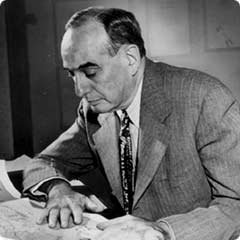
Jane Jacobs is brilliant. I'm actually more interested in her foil Robert Moses though. Moses was planning to run an expressway through her neighborhood, forcing her to prove why that was a bad idea. Moses made a lot of mistakes, but he did a lot of amazing things also. I'm interested in how to marry Moses's vision and Jacobs's heart. Synthesis.

Saturday, January 27, 2007

Cut-through Pricing

Sorry I've disappeared a bit recently. I'm in graduate school at U.Va. but hopefully I'll be getting involved in city issues again soon.
Anyway, I read the recent article in the C-Ville about cut-through traffic, and I wanted to share an idea with you.
It appears that there is broad agreement that cut-through traffic is a big problem in the city, and most of it isn't city residents and almost none of it is residents/employees in the relevant area.
An economist would suggest that this situation is a hidden subsidy of transportation to a few drivers, at the expense of neighborhood safety and quality, meaning public health, safety, and welfare. I propose that we could have a better system if we taxed that subsidy away, and used the proceeds to fund multimodal transportation improvements in the city and put a percentage into the affordable housing fund. Cut-through pricing is a regressive tax, since the pricing is the same regardless of income or wealth, so it's important that the funds be used to promote better transportation and housing options for low-income people to balance that.
I think the best way to do it would be to set up electronic tolls on roads that neighborhoods nominate. Neighborhood residents and employees would not be charged for using those roads, but people who neither live nor work there, who are cutting through to another destination, would pay a dollar or so. In high traffic, it's a fair price to avoid congestion. When there isn't high traffic, cut-throughs aren't necessary (though people are still free to do it).
I'm not sure how much this system would cost to set up. Similar systems have been set up in places like London and Singapore to manage congestion efficiently (and we could do that also, perhaps obviating the need for cut-through traffic in the first place), but I've never seen a system initiated to protect neighborhood quality.
I like that this idea supports neighborhoods in that they choose which roads get pricing, and they don't pay for their own roads. Neighborhoods could also decide how much each road should be charging.
What do you think?

top left photo: one local solution for cut-through traffic is to block off streets for everyone. photo by Bill Emory.
lower right photo: signs indicating electronic road pricing in london. traffic is not slowed or stopped. photo by Nevilley From.

Monday, January 22, 2007

Woolen Mills News Roundup

My neighbor Bill Emory posted a nice roundup of all the tv news the Woolen Mills Architectural Survey received. That's me in the hat towards the end.

Saturday, November 25, 2006

The Woolen Mills Historic District

Lyle Solla-Yates

The Woolen Mills neighborhood of Charlottesville, Virginia presents an excellent case study to understand historic preservation laws and their effects. I will attempt to answer several questions: Is Woolen Mills historic? Why hasn’t it been established as a historic district already? How would a historic district contribute to the neighborhood? Would property rights be affected? And how can the Woolen Mills Historic District be created?

Is Woolen Mills historic?

Written history first mentions the Woolen Mills area before the Civil War, as a busy riverport named Pireus. The reasons for Pireus’ importance were geographic. Moore’s Creek runs into the Rivanna River at this point, where strong rocky high ground provides a dramatic site for development. This area also provides a relatively easy ford across the river named Secretary’s Ford (currently where Interstate 64 crosses the Rivanna River). This ford attracted the second highway into Albemarle County, the Mountain Ridge Road, later called the Three Notched Road. This site then, was a uniquely attractive site for commerce in the region. The earliest documented commercial activity at this site began with Edward Moore’s water grist mill in 1795 (Britton). The next owner, William D. Meriwether, began an aggressive construction agenda. Beginning around 1817, when the Rivanna became navigable, Meriwether built a dam, a toll bridge, a merchant mill, a saw mill, and a port operation. Two buildings on the National Historic Register date from this period, the House at Pireus (no longer standing) and the Pireus Store, now converted into a private residence at the corner of Market Street and Riverside. The prosperity of what became known as the Charlottesville Factory continued to expand, providing desperately needed manufactured goods to the South during the Civil War. On March 3, 1865, the cotton mill was burned by Union troops. The complex was rebuilt and expanded after the war. The Woolen Mills Chapel was constructed in the 1880s to serve the workers. The Mills closed down in the 1960s as textile manufacturing moved overseas. None of the mill buildings have been added to the historic register. The main building has been demolished, leaving the foundations and the ruins of two accessory structures.

There are some points that make the Woolen Mills particularly interesting in history. The Mills was significant in the Civil War, as a Southern industrial center, source for uniforms, and site of wartime destruction. Pireus is interesting as a remnant of a bygone way of life based on the river, when Albemarle was at the edges of Western civilization. The Reconstruction era Woolen Mills are interesting as a site of blue collar industrial history, a past that is disappearing under the weight of globalization.

Why hasn’t it been established as a historic district already?


According to resident Bill Emory, some people in the neighborhood are afraid that historic designation may hurt the resale value of their property by restricting future uses.

Beyond uncertainties about the effects of historic designation lies the issue of responsibility. The growth of Charlottesville through annexation has left the Woolen Mills neighborhood cut apart, split between the city and the county. The primarily residential and agricultural area has become part of the city, while most of the old mill buildings and the Marchant House (picture above) remain in the county. This political divide makes addressing the Woolen Mills as a whole difficult. Albemarle County has recommended all or parts of six villages for historic preservation (Albemarle County). Woolen Mills is not on that list. The County did include Advance Mills, a similar area which is listed on the National Historic Register. Besides unambiguous jurisdiction, Advance Mills also benefits from a remote location in Albemarle County’s Rural Area (a region intended for preservation of open space) and some historical structures of comparable quality to Woolen Mills. On the Charlottesville side, Planning Commission member Bill Lucy says there are several potential historic districts in line before the Woolen Mills neighborhood can be considered. He has stated publicly that the “Woolen Mills may not be as historic as it thinks it is,” citing the large number of post-World War II houses in the neighborhood. I believe that this view is due to the fragmented nature of the Woolen Mills neighborhood compared to the Historic Woolen Mills. Viewed alone, The Woolen Mills neighborhood can look like a postwar suburb to a stranger. This is how the City of Charlottesville views Woolen Mills.


How would a historic district contribute to the neighborhood?

Albemarle County’s Comprehensive Plan notes that National “register listing provides recognition, but little or no real protection for those resources. Local historic district zoning is the primary means by which government can provide effective legal protection for historic resources and their settings. Moreover, the number of resources destroyed in recent years suggests that continued reliance solely on voluntary measures would not be adequate to protect those resources” (Albemarle County).

Historic designation at different levels has different effects. Listing on the National Register provides:

1. Consideration of historic status in any federal project that may affect the site (meaning an Environmental Impact Statement; projects include federally funded road construction),

2. Availability of a 20% tax credit for rehabilitation of historic properties that produce income (not owner occupied), and

3. Availability of Federal grants for preservation.

After listing, the state of Virginia provides:

1. Grants to local governments to document and preserve historic buildings,

2. Some financial and complete organizational assistance in surveying and planning preservation projects,

3. The option to owners of setting historic preservation easements, which restrict what can be done with the land, but also create significant tax advantages for federal income tax (100% of easement value deducted), state income tax (50% of easement value credited), property tax (taxable value of property is reduced), and estate tax (reduced estate value, plus 40% of land excluded from taxable sum),

4. Availability of a 25% state income tax credit for rehabilitation of historic properties, regardless of whether the owner lives there or not, (this credit can be combined with the 20% federal tax credit for income-producing property), and

5. Qualification for state grants to local governments and nonprofit organizations for historic preservation projects and maintenance.

Albemarle County offers:

1. Nothing yet. They are currently working on the creation of a Historic Overlay District in their zoning ordinance. None of the Woolen Mills lying in the County is listed on the National Historic Register. The closest listed property in Albemarle County is Monticello.

Charlottesville offers local designation as a historic district. This gives a neighborhood:

1. Design control, meaning that any new development or change to the exterior of a building in the historic district is subject to review by the Charlottesville Board of Architectural Review on criteria based on “economic feasibility and compatibility of the proposed construction/alteration with the site and other properties in the design control district… [and] that the proposed rehabilitation work complies with the Secretary of the Interior’s Standards for Rehabilitation” (Chapter 7: Historic Preservation, 2001 Charlottesville Comprehensive Plan). Projects can be denied by that body.

That is the full landscape of government programs offered to historic areas like the Woolen Mills. The benefits of the state and federal incentives are fairly unambiguous. Several studies (see for example, “The Impact of Historic District Designation on Property Values: An Empirical Study,” Schaeffer) point to rising property values and greater long term stability of property values in nationally designated historic districts. This improvement in property values may be seen as a potential threat to neighborhood diversity and the goals of affordable housing. A mitigation strategy may be appropriate. Stu Armstrong of the Piedmont Housing Alliance suggests that reverse mortgages may be helpful. Reverse mortgages pay owners the value of their property in one or more payments and then accrue interest in the form of a lien on the property. Reverse mortgages are unavailable to those under 62 years old in the United States (Wikipedia).

Resident Bill Emory has suggested that the Woolen Mills may be an attractive destination for tourists interested in industrial and Civil War history. A tour of the village could add to the existing mix of attractions at Monticello, Ash Lawn, and the University of Virginia (Emory). According to APVA Preservation Virginia, statewide historic attractions bring over 6.5 million visits, a major slice of a $14 billion tourist industry.

Perhaps the most important effect of historic district status may be the consciousness of Woolen Mills history among residents. The preservation of historic buildings and open space can be a source of civic pride and neighborhood identity.


Would property rights be affected?

State and federal registers do not hinder property rights in any significant way. It becomes more difficult for a federally funded project to threaten a historic district, but this is considered to enhance the security of neighborhood investment, a benefit to property owners. Historic preservation easements are established by property owners, and they offer major tax benefits to balance the property rights sacrificed.

Design control at the local level affects property rights, specifically development rights. The Charlottesville Board of Architectural Review can deny a development that they feel is incompatible with the neighborhood. This can also be viewed as a protection of property rights, by preventing projects that threaten the neighborhood. Research on local historic districts indicates a modest decline in property values, most likely due to uncertainty on what will and will not pass muster (Schaeffer). However, a different study of local historic districts in Abilene, Texas had the opposite finding (Coulson). This disparity is most likely due to the presence of a local property tax benefit in Abilene. Affected properties enjoy a $200 or 20% tax break, whichever is higher. The researchers found that the increased tax revenues from restoration and construction in that case significantly outweighed property taxes lost.

How can the Woolen Mills Historic District be created?

The Woolen Mills Historic District currently in the pipeline may be problematic. The City of Charlottesville is planning to create this district within the next few years. Most likely it will be composed of a subset of the Charlottesville Woolen Mills neighborhood, excluding some postwar housing and the Albemarle County section. This De Facto District will be under design control, by a Board of Architectural Review that may not grasp the complex history and character of the neighborhood as well as Woolen Mills residents. Albemarle County may recommend the Marchant House for the National Register. Nothing much will seem to happen.

The Woolen Mills Historic District could become something very different, however. Listing the entire Woolen Mills, including the old mill buildings, the graveyard, and the Marchant House would create a bureaucratic sense of unity that annexation destroyed. Listing would also create some leverage against potential large, federally funded road projects, such as a new onramp to Interstate 64. It would also open up some new financial opportunities to the Woolen Mills as a whole that could create a critical mass for significant preservation efforts, with potential effects on tourism and other businesses.

The establishment of the local historic district could be significantly improved. A similar system to Abilene’s, where property owners enjoy protection as well as tax benefits, may be appropriate in Woolen Mills. Montgomery County’s 10% property tax credit is particularly successful. “The tax credit is 10% of documented expenses for exterior maintenance, restoration or preservation work. The work must be certified eligible by the Historic Preservation Commission.” (Montgomery County Planning Board). The Montgomery County system has the benefit of tying tax benefits directly to investment and maintenance, rather than a tax cut across the board. This aligns the local tax benefit with the overarching goal of historic preservation by reducing the local tax burden on renovation and maintenance in the neighborhood. One weakness of the Montgomery County approach compared with Abilene’s is the amount of regulation necessary to ensure that only those engaged in historic preservation receive benefits. Abilene also benefits every property tax payer in the district, easing the affordability issues that historic preservation can create. An additional option would be a flat property tax cut on buildings in the district, 25% for example. This would have the benefits of a much lower regulatory burden while maintaining the Montgomery County focus on encouraging preservation and maintenance, and rewarding homeowners for investing in a historic district, where their property rights may not be as strong as elsewhere (Durning).

Design control can be shifted to allow greater local control. One method is the Form-Based Code. In this model, the neighborhood meets for a one-week design charette to plan out what they want for the neighborhood. Then whatever fits that becomes the design code. This eliminates the uncertainties of design control by spelling everything out up front. It also puts the neighborhood in the driver seat, protecting it from development that is disruptive to the historic fabric of the neighborhood, while allowing substantial flexibility for creative new designs. “The new codes, he says, focus less on what's forbidden and more on what's desired--the kind of town or city that people indicate they want. Mixed use is welcomed back. Basic rules are specified--for example a range of acceptable building types from apartments and townhouses to detached villas or high-rise towers (leaving individual design, for the most part, to owners)” (Peirce).

The Woolen Mills Historic District, done right, can be very exciting. The historical importance of the area suggests that measures should be taken to preserve it, and there is no shortage of state and federal support to do so. Support at the local level is not yet ideal, but Albemarle County’s current effort to form a historic zone ordinance creates the opportunity for a single Woolen Mills Historic District that bridges both city and county, with the same rules on both sides of the line. This would create a system for preservation that is effective, beneficial to the city and county, and fair to property owners.


Works Cited

1. Britton, Rick. 2006. “The Charlottesville Woolen Mills, Clothing a Nation.” http://www.historicwoolenmills.org/Charlottesville.html

2. Albemarle County. 2000. “Albemarle County Historic Preservation Plan.”
http://www.albemarle.org/department.asp?department=planning&relpage=2463

3. Schaeffer, Peter V. 1991. “The Impact of Historic District Designation on Property Values: An Empirical Study.” Economic Development Quarterly, Vol. 5, No. 4, 301-312.

4. Emory, Bill. 2006. “The Woolen Mills Neighborhood, Charlottesville at Work.” http://www.billemory.com/woolenmills/wmtxt/wm01.html

5. APVA Preservation Virginia. 2006. “Legislative and Local Issues.” http://www.apva.org/issues/state_budget.php

6. Coulson, N Edward. 2001. “The Internal and External Impact of Historical Designation on Property Values.” Journal of Real Estate Finance & Economics, Vol 23, No. 1, 113-24

7. Abilene, City of. “Code City of Abilene Texas: Article IV. Historic Zone Tax Reduction.” http://www.municode.com/resources/gateway.asp?sid=43&pid=10188

8. Durning, Alan. 1998. Tax Shift. Seattle, Washington: Northwest Environment Watch.

9. Peirce, Neal. 2003.“Zoning: Ready to be Reformed?” Washington Post Writers Group.

Wednesday, November 08, 2006

Gentrification and the Commons

I would like to get a couple of ideas down before I go to sleep. In my Preservation Planning class with Rich Collins, a few major issues came up, and I had some ideas about them.

1. Rapid neighborhood change, also called gentrification, also called neighborhood succession. I am extremely critical of this process, because it harms neighborhood identity and displaces disadvantaged people (low income minorities on the way up in land value, and elderly residents on the way down). I believe that given a free property market, (and economics backs me up here), rapid, catastrophic neighborhood change would never occur. The property market would be sufficiently fluid, and various neighborhoods sufficiently similar in value and character (rather than highly segregated, the current norm) that catastrophic shifts would be impossible. The property market would bend like the reed rather than break like the oak. I'm saying we don't have a free property market, and it harms our neighborhoods. I believe that correcting this situation by eliminating building taxes (which grossly distort the market) and raising land taxes (which are either beneficial or neutral, depending on who you read) would enhance neighborhood security and wellbeing and ease ethnic and class tension. You get the dog used to the baby by slowly getting them together, not keeping them apart. In sum, I believe that eliminating the building tax will eliminate gentrification.

2. The Commons is sacred. I would argue that the central tragedy of our culture is the Tragedy of the Commons. By this, I mean that we are terrifically good at protecting, preserving, and enhancing everything that doesn't matter, and catastrophically clumsy at protecting, preserving, and enhancing what does matter. Enormous wealth and energy goes towards the marketing of pet care products, specialized shampoos, gambling, movies, SUV design, things. We're very good at dealing with things that we can count. Things we can't count so well, like security, health, learning, happiness, family, spirituality, nature, we have a lot of trouble with. The solution posed by many progressive thinkers is finding better ways to count these things. If we are creating negative externalities (actions that make economic sense, but harm the Commons), we should account for them. We should charge a carbon tax, or encourage offsetting, or eliminate subsidies, or make abortions more difficult, or tax people for not voting, or make polluters liable for cleanup, and so on. And these may be good things, but they are reactive. "Oops, I'm endangering my survival, I better change something." Survival is a logical good thing, but not sacred. God isn't there. I think this secularization of the Commons and making economic activities the sacred Good is a cataclysmic error of our culture.
Other cultures approach this problem differently. Native Americans have been quite clear that they view their relationships to each other, the land, the sky, other animals, the water, and other aspects of the Commons as sacred. Of course you don't destroy the air you breathe. It's sacred. It isn't even an option. The illogical becomes the impossible. You can still work within the sacred, but you understand and appreciate that that is what you are doing. One feels grateful and gives back to the community, the land, the animals, the Commons that have been so bountiful and kind.
Think about these issues this Thanksgiving. Amen.

Tuesday, October 31, 2006

Better America

I've put together a little wiki on national policy. The idea is to explore the issues, the options, what may happen, and act rationally based on American values. Crazy stuff, I know. It's an idea I've had for a long time, that conservatives use think tanks extremely well because the top-down elitist nature of think tanks works well with conservative thought. Web 2.0 goodies like blogs and wikis are more appropriate to liberal thought. So here's a first stab. Have at it! The password is "usa".

Friday, October 27, 2006

Charlottesville Green Drinks

a la Heidi:

Green Drinks is finally coming to Charlottesville November 14th. We’ll meet the second Tuesday of every month at 7pm at the Twisted Branch Tea Bazaar. Green Drinks is a casual meeting of folks from all sorts of different environmental fields. It’s going to be a great time—bring friends!

Thanks to Heidi for organizing this.

Wednesday, October 25, 2006

Internship with ACCT

A Charlottesville transportation nonprofit is hiring two unpaid interns. ACCT is doing some exciting work promoting a more healthy mix of transportation options in the Charlottesville Albemarle region. I highly recommend this opportunity to anyone interested in sustainable mobility or the fast growing green job market. I predict that green (which is the new black) is also going to be the new .com in the business world. Yes, I predict a green bubble. It will be good and bad. But there will be a lot of exciting jobs out there.


**ACCT announces two internships***

The Alliance for Community Choice in Transportation is a nonprofit organization that works to promote biking, walking, transit, car-pooling, and sustainable land-use in the Charlottesville area. ACCT is pleased to announce two internships for the fall and winter of 2006, open immediately.

Marketing Coordinator, posted 10/16/06
One of ACCT's most prized projects is the Regional Mobility Map, a Charlottesville-area map that shows roads, bike lanes, transit routes, safe walking routes, and trails. We have 40,000 maps and we need them to be spread widely through our community! Currently, the map is distributed at numberous area business locations. The Marketing Coordinator is responsible for coordinating with our long list of business sponsors about map distribution. The Marketing Coordinator will contact businesses, deliver more maps when necessary, and help some businesses figure out a more successful strategy for map distribution. Lastly, the Marketing Coordinator will help ACCT develop a strategy for recruiting new volunteers and members using the maps as a vehicle for outreach. It is essential that candidates should be able to communicate in a clear and professional manor. Candidates should be creative, be able to work independently, and be familiar with Excel. Page layout skills are a plus. Interns should plan to dedicate about 5-10 hours per week to this position, throughout November and possibly December. This is an unpaid, resume-building internship. Candidates will gain experience working in the nonprofit sector and creating grassroots marketing strategies.

Safe Routes to School Development Coordinator, posted 10/16/06
The Federal Highway Administration recently announced a new grants program for Safe Routes to School programs. Safe Routes to School is an initiative to encourage walking and biking around schools using education, encouragement, enforcement, and engineering strategies. Albemarle County will partner with ACCT to submit an application for funds to make physical improvements around several elementary schools. The Development Intern would work directly with Albemarle County planners and ACCT staff to write the grant application and develop supplemental materials. This position is an excellent opportunity to develop grant-writing skills and to collaborate between state, county, and nonprofit stakeholders. Candidates should have strong writing skills and a basic comprehension of planning and engineering language. Interns should plan to dedicate about 5-10 hours per week to this position, through November and December. This is an unpaid, resume-building internship.

Descriptions and application details can be found at http://www.transportationchoice.org/internships.html. Questions should be directed to Alia Anderson at alia@transportationchoice.org.

Alliance for Community Choice in Transportation
PO Box 1582
(108 5th St SE, Suite 206)
Charlottesville, VA 22902
tel/fax: 434.295.6554
www.transportationchoice.org

Tuesday, October 17, 2006

Monday, September 18, 2006

What to do?

So I have this blog and I almost never post on it. Part of it has to do with my duties at graduate school at U.Va. (Urban & Environmental Planning, great program) and part of it has to do with my duties at William McDonough + Partners. Mainly though, it's just that I haven't really framed this blog in a useful way. I don't know what it's about, and I'm guessing you don't either. I originally intended it as a personal blog, but blogger is not personal. Waldo's cvilleblogs.com was what inspired me to create it, but that doesn't appear to be picking up my feed, to the enormous disappointment of my zero regular readers. In the near future, I will most likely scrap this blog and create something more useful.

But let me say that tonight was wonderful. Brian Wheeler from Charlottesville Tomorrow (a former employer) and, separately, the Albemarle County School Board, gave me the heads up that Tim from pandora.com was hosting a discussion in town about their excellent service. Fascinating discussion, and it offered the rare delight of seeing Brian, Waldo Jaquith, and Sean Tubbs, some of my favorite people.

Here is my current favorite pandora radio station, based on Django Reinhardt. Highly recommended.

And then I was able to sneak into the Charlottesville City Council meeting regarding trucks cutting through my street in the historic Woolen Mills. As I posted earlier, this is a major problem in my neighborhood. I was able to speak at the end, saying essentially that we don't have the information that we need to make the right decision. It's extremely frustrating that it's taken this long for the issue to be raised seriously, but I think it's important that we do this right. The Council expressed willingness to ban truck traffic on Franklin Street (popular for trucks because of its beautiful stone underpass below the train tracks). I think that makes sense as a stopgap measure, but I'd really like to see a more reasoned solution based on useful data, with the participation of all of the stakeholders. Surrounding businesses expressed anger at not being included in the process, but I think that's because there was no real process. The neighborhood came together and said "enough!" Which is fantastic, and I credit Bill Emory for his good work of getting the word out, though many others are also deserving of praise. I thought turnout was very good, excepting the absence of any residents of Carlton Road (who I believe are Albemarle County residents in Lindsay Dorrier's district).
Council voted to table the issue until next month, at which time hopefully we'll have some better data, though I didn't hear them request any from staff. We're supposed to have a sitdown with all of the stakeholders within the next month. I'm optimistic that some good will come of that and we'll have a better grasp on how to solve this problem.

Friday, August 18, 2006


Another position at William McDonough + Partners has come available. We're hiring another runner. It's part-time, ten dollars an hour. E-mail HR for more information. The position certainly isn't glamorous, but it's an enormously exciting place to work. Highly recommended to anyone interested in starting out and trying to get experience in green business and design.

Tuesday, August 15, 2006

I am a man of many interests, but I would say that my two favorites are green cities and socializing. So you can understand my delight at learning about Green Drinks. This is an international networking event for those of us working on making things better, making the world more "green". What is meant by that is an ongoing debate, and I worry that the term will become like "fresh" and lose all meaning.
But back to this. This is great. I'm looking into how much of a time commitment organizing this would be. I imagine that work and grad school will be a drain on my time and energy, but I love this idea. This sounds like big fun.

Monday, August 14, 2006


On my way back from DC today, I stopped at the first Citgo on 29 south to refill, as I generally do. I was delighted to see, printed on the pump, 10% ethanol. They're using the E10 blend, which any recent car can use without modification. Now I 10% know how ethanol car drivers feel when they fill up: great. This doesn't appear to be company policy, so it may take a while for this innovation to reach Cville (it just took me an hour and 45 minutes).

Thursday, August 03, 2006


Worldchanging is looking for some volunteers to help them deal with their enormous growth. I highly recommend this opportunity to anyone looking to get into the sustainable development world.

Sunday, July 23, 2006

I rarely talk about neighborhood issues, but this is beyond the pale. One of my neighbors was hit by a truck this morning at 2 AM. Luckily, the front porch was between said neighbor, and the truck. I am becoming increasingly concerned about the truck traffic on my street. Making it a one-way south street might make some sense, since all of the truck accidents that I've seen (three, but I bet there have been more) have been north-bound.

Wednesday, July 19, 2006

This is a piece that I'm submitting to Echo, a local magazine. It's a primer on land tax and why it's a Very Good Thing. Thanks to my parents, my girlfriend, Echo's editor, my coworkers, and Mike Pasquale for the support and help.

The Da Vinci Tax Code
Lyle Solla-Yates

The book and recent film The Da Vinci Code spirals around the lost Western tradition of the sacred feminine, a concept that challenges many of the assumptions and practices of our culture. This article is about another lost Western tradition, the secret of conforming our way of life to the landscape, rather than the other way around. This concept is philosophically parallel to the sacred feminine. It is the secret of respecting the other side of the issue, seeing the land instead of the buildings. The secret has to do with how land is used, and how taxes shape its use and misuse.
Not so long ago in human history, there were no taxes. In the Middle Ages, feudal lords would require a task (tasque in middle French, the derivative of our word “tax”) to be done by their subjects in exchange for the use of the lord's land. But the land itself was not taxed, and peasants and merchants were free to use it as best they could.
There are many pictures of towns, villages, and landscapes from this period. A few things stand out. First, the absolute soul-stirring beauty of these towns and landscapes. There are places like this in Virginia, but fewer and fewer. Second, the way that buildings are clustered together, to better conserve heat and protect vital agricultural land, and simultaneously create urban squares and plazas that are full of activity and life, ripe with commerce and culture. Buckminster Fuller called this synergy. In a healthy landscape, the elements of the landscape - home, business, farm, forest – are greater than the sum of its parts. This is design for long-term sustainability. And it's delightful, completely satisfying.
But the secret has been lost, and modern buildings and roads are a plague on the landscape, and a curse on the cities. The real estate market has become warped and twisted by a taxation scheme designed to promote suburban sprawl and dying central cities. In some areas experiencing major growth, the central cities are reinvested in, raising housing costs and pricing out many residents. Under this system, growth creates more problems than it solves. The real estate market is sick, and there is a cure. Markets properly cared for give us what we want in the most efficient way possible. It's what they do. But when buildings are taxed, it sends the market a message: “Stop building in valuable areas, it isn't worth it. Buy up valuable land and sit on it: it's bound to go up and be a good investment. If you want to build, build out where land is cheap and the taxes are low. Wipe out the farmers and get rich. If you really want to build in the city, build skyscrapers: anything smaller won't be worth it.” This is not the message that most citizens want to send the market. And this isn't the message that many real estate developers and investors want to hear. But they follow it, and we see it across most of America and the world.
Not everywhere though, because some places don't tax buildings, or tax them less. Those places tax land higher, because as Will Rogers said, “They ain't making any more of the stuff.” When communities tax land high, they tell the market “Don't waste land, use it as well as you can. If you can't use it, sell it to someone who can.” And then you get an outpouring of creativity and ingenuity to create wonderful things to be enjoyed by everyone. This means better, less expensive housing for everyone, better places of work, shorter distances to travel, better places to shop. This means more jobs, a better economy, less pollution, healthier people who can walk and ride instead of drive, and a countryside where small farmers prosper instead of real estate speculators. It's a win-win-win.
When communities make the transition (usually phased in over ten years), three quarters of residents pay less taxes. This is because most people live on land that's being used well, so they benefit. However, places that aren't being used well, such as prime downtown real estate paved for parking, or prime agricultural land growing grass, become a tax liability. Those empty downtown lots become buildings that contribute to the health of the city, and that rural land lying fallow becomes active farms that contribute to the food security and aesthetics of the region.
Several communities across America and the world have demonstrated the success of the land tax. You may have heard of the startling recovery Pittsburgh, Pennsylvania made after the core of the city, its steel mills, closed down. The secret? They'd taxed land higher than buildings since 1913. The economic transition was challenging, but efficiently handled. Plenty of other rust belt towns, such as Flint and Detroit in Michigan, are still staggering from the changes.
Harrisburg, the capital of Pennsylvania, pursued the same strategy after it was declared the second most distressed city in the nation in 1981. Since 1982, when they began taxing land three times higher than buildings, Harrisburg made an astonishing economic recovery, attracting $1.2 billion in new investment while reducing the tax burden on 90% of property owners. Newburgh, New York, on the other hand, the only city listed as more distressed than Harrisburg in 1981, didn't fare so well. After years of attempted reforms and economic development schemes, it remains one of the poorest cities in America, another distressed city which tragically did not pursue the land tax. Neither did Lynchburg, Richmond, or Martinsville, or any of Virginia's first cities, to great loss.
The land tax can come to Virginia. Taxing land at a higher rate than buildings is legal in Roanoke city and Fairfax city. The state legislature can authorize it elsewhere, if the political will exists. Thriving urban centers, the return of family farms, and a beautiful, healthy landscape preserved for the future can happen here. That's the secret.

Thursday, June 22, 2006

Outstanding news from San Francisco. Starting now, all San Franciscans will enjoy universal access to health care. They realized that they were paying so much in emergency care in public hospitals and clinics and additional services for the uninsured, that the city would actually save money by encouraging access to health care.
This is brilliant. Pay close attention to this, Charlottesville, because I would be delighted to pay $3 a month for the health care I currently do not enjoy. And consider what a boost to local affordability this would represent.
Am I correct in believing that Charlottesville would need enabling legislation to do this? Any chance of that in Virginia?